
Check out the Massachusetts DCR Forest Health Program Story Map Collection, Aerial Survey Results, and the Asian Longhorned Beetle Story Map Collection to view interactive maps and learn more about the common insects and diseases impacting our forests.
Monitoring the health and well-being of our Forests

Looking for Emerald Ash Borer
The Massachusetts Department of Conservation and Recreation’s Forest Health Program checks on the health of forests across the state. We study insects, diseases, and other problems that can harm trees by using different surveys and traps. We work with local, state, and federal partners to find, manage, and reduce problems that can damage Massachusetts’ state forests.
Annual Aerial Survey
The DCR’s Forest Health Program conducts annual aerial survey of the state's forests.
Forest Health Specialists fly over of the entire state each year to detect and map damage to the state's forests. All areas that are detected and mapped from the plane are then visited on the ground by Forest Health Specialists to determine what caused the damage seen from the plane.
The primary agents causing damage to trees and forests across the state can dramatically change from year to year; annual aerial survey provides us with vital information that allow us to identify our greatest threats and concerns for forest health. Forests are dynamic systems and forest health is strongly influenced by many factors.
See our Aerial Survey Story Map for more information about how and why aerial survey is conducted and our Aerial Survey Results Story Map for the latest information on what has been found during our annual aerial surveys.
Current Forest Health Threats
| Agent | Picture | Origin | Host Trees | DCR-Management Approach |
|---|---|---|---|---|
Aproceros leucopoda | 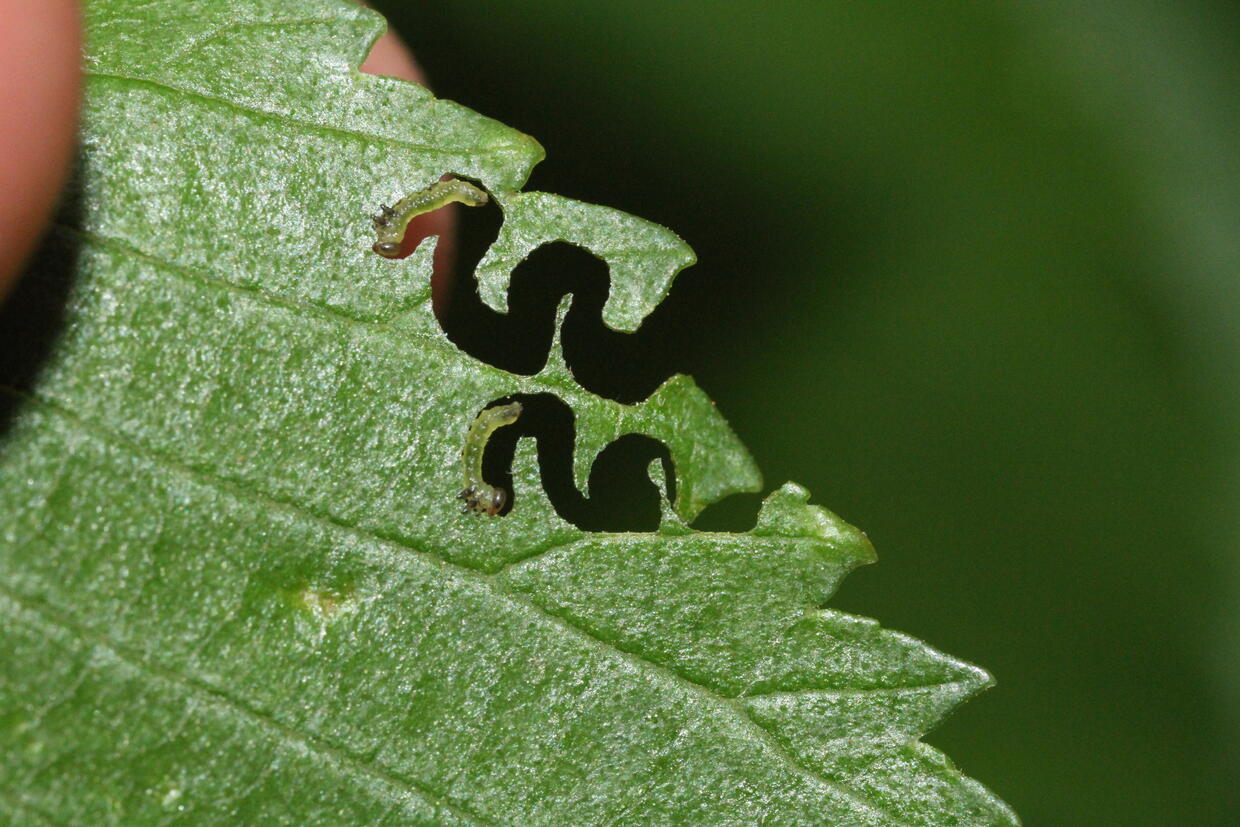
| Introduced 2023 | All elm species | monitoring current infestations and surveying for new ones |
| Beech Leaf Disease | 
| Introduced 2012 in USA, 2020 in Massachusetts | American Beech, European Beech, and Oriental Beech | The DCR Forest Health Program is surveying beech trees across the state to determine the extent of the disease in Massachusetts |
Spongy Moth Lymantria dispar | 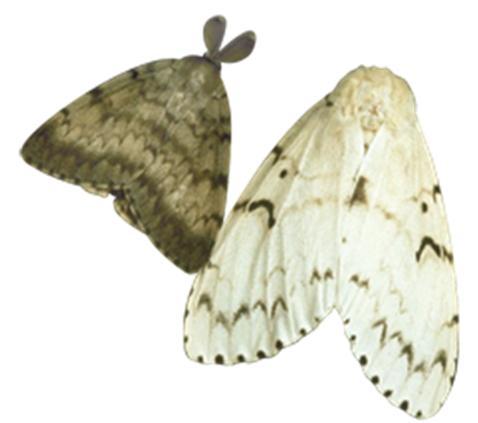
| Introduced 1869 | Oaks, other deciduous species | Current management approach relies on natural population controls – naturally abundant virus and fungus populations regulate spongy moth population cycles |
Winter Moth Operophtera brumata | 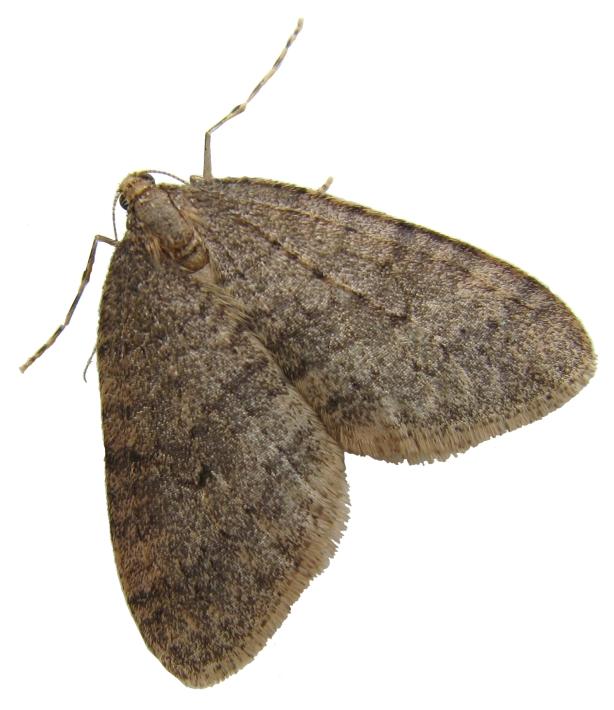
| Introduced 2002 | Maples, oaks, other deciduous species | Biocontrol species, Cyzenis albicans, has been released and successfully established in an effort to manage winter moth populations. |
Hemlock Woolly Adelgid Adelges tsugae | 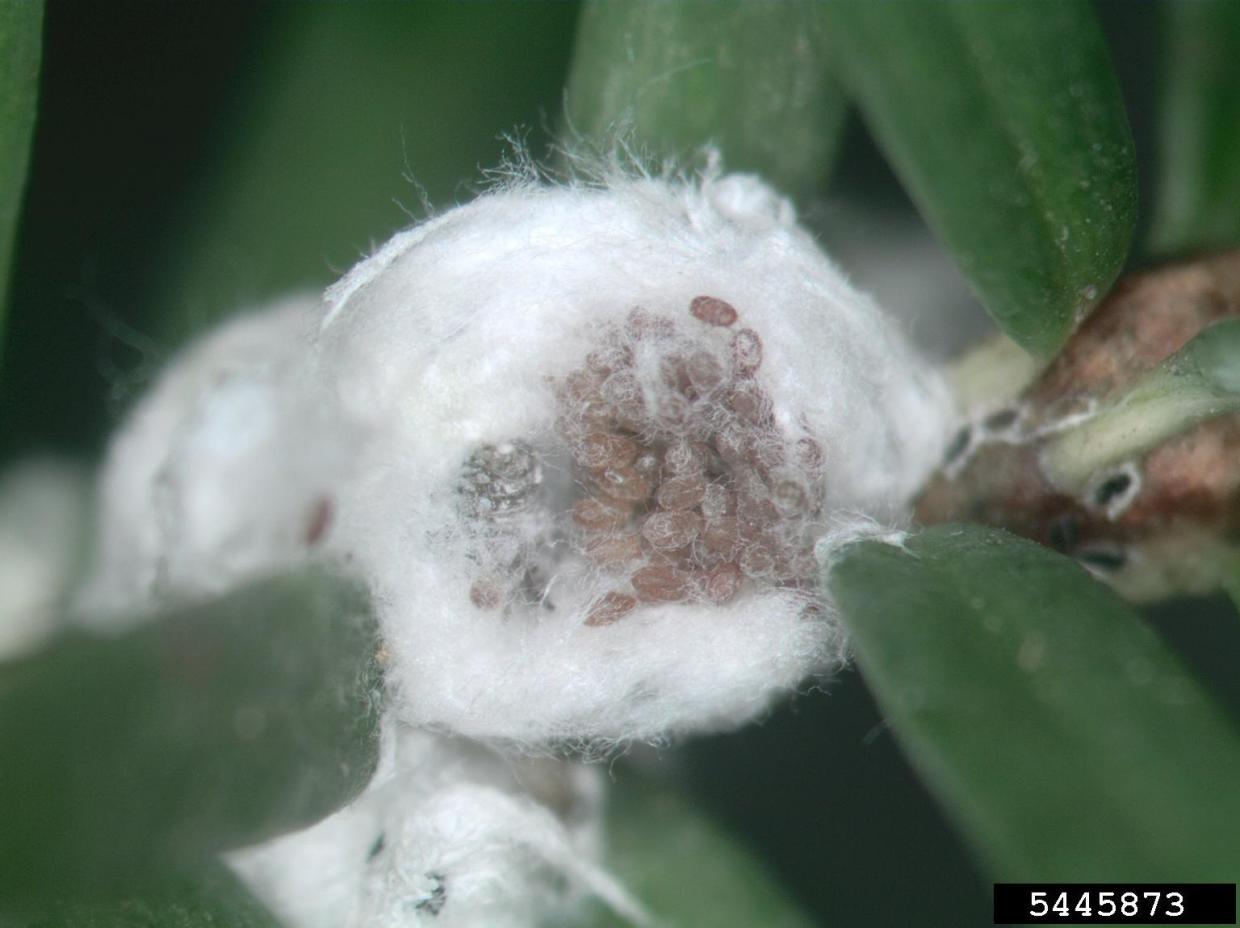
| Introduced 1989 | Eastern hemlock | Three biocontrol species, Psedudoscymnus tsugae, Laricobius nigrinus, and Leucotaraxis spp (silverfly), have been released in MA to limit establishment success. |
Southern Pine Beetle Dendroctonus frontalis | 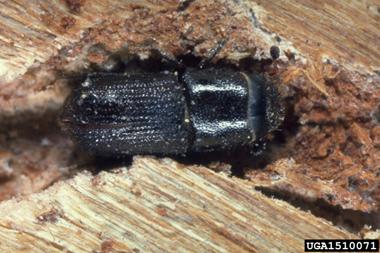
| Native | Pitch pine | Population densities are being monitored through annual trapping. The impacts of climate change could significantly alter southern pine beetle generation periods and devastate pitch pine stands. |
Emerald Ash Borer Agrilus planipennis | 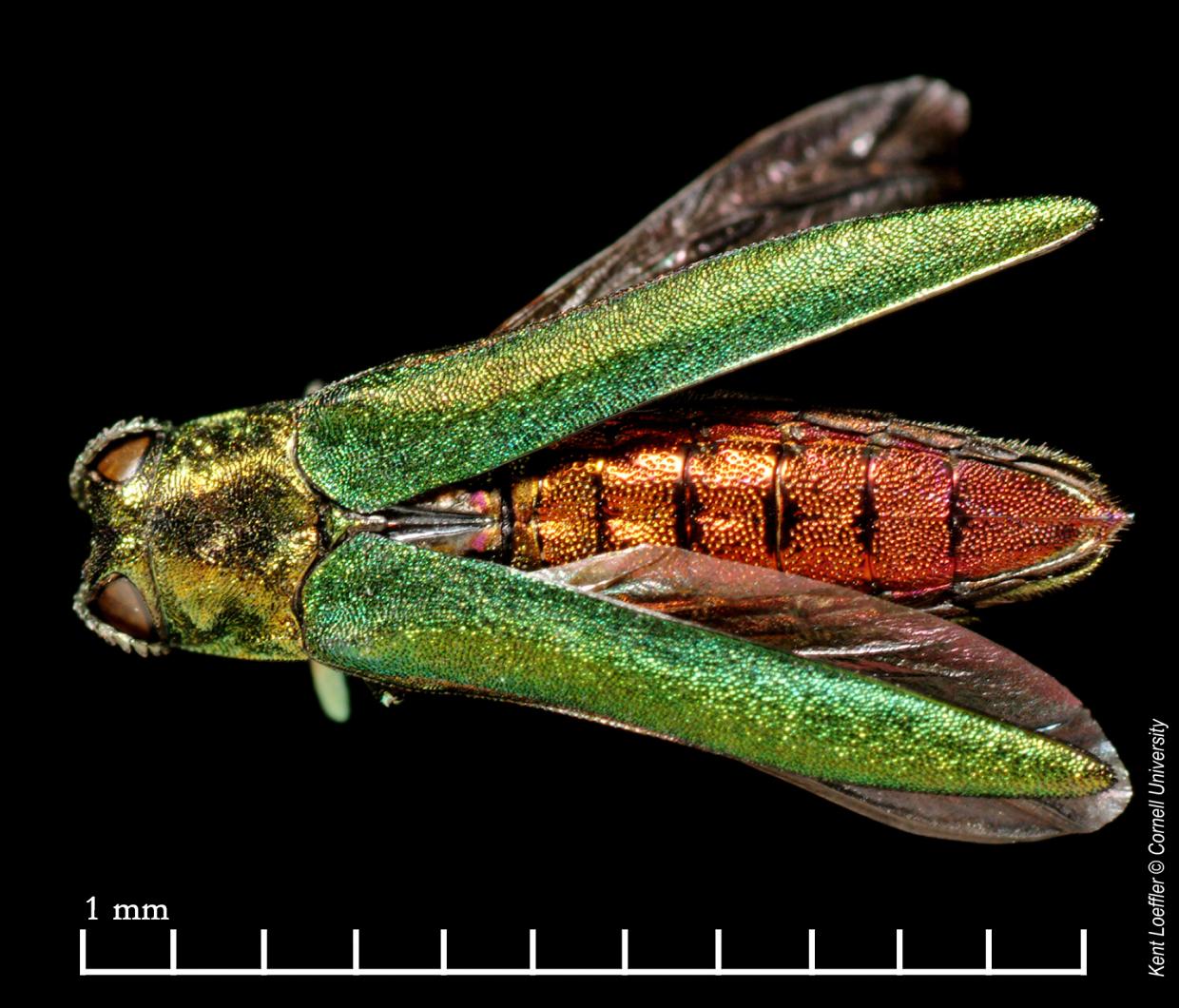
| Introduced 2012 | All ash species | Three biocontrol species, Tetrastichus planipennisi, Spathius galinae, and Oobius agrili, have successfully been released in MA. Continued releases are planned. |
| White Pine Needlecast | 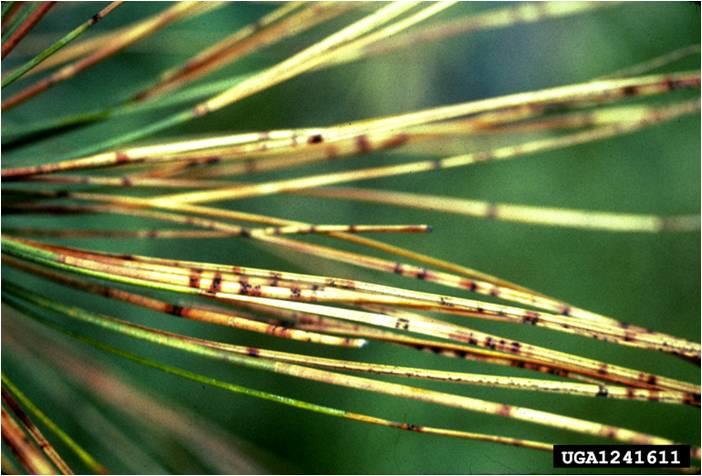
| Native | Eastern white pines | White pine defoliation is being monitored across the state. Needlecast has been identified to be caused by multiple fungal pathogens; the most prevalent agent in Massachusetts is Lecanosticta acicola. |
Anoplophora glabripennis | 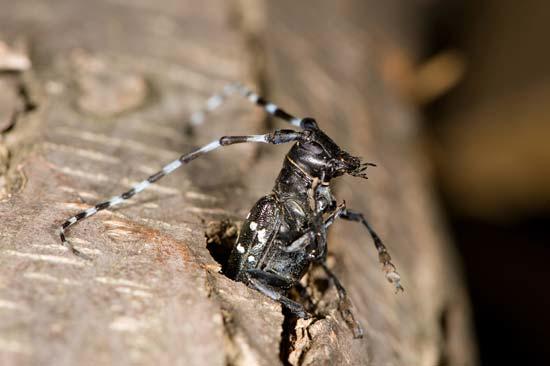
| Introduced 1996 | 12 Host genus | The eradication program established quarantines to avoid transporting infested wood outside the area. Survey every host tree in quarantine areas for ALB signs. Remove infested trees and destroy them by chipping. DCR works in cooperation with USDA PPQ APHIS. |
Tree Healthcare Services

Forest Health Tree Crew
The Forest Health Program provides tree health care services for the DCR’s state forests, parks, and reservations.